AI-Powered Conversational Agents in Language Education: a Systematic Literature Review of Primary and Secondary Education
Technology, Knowledge and Learning (2026). Springer
Researcher & engineer in Computer Science. I build open-source low-code platforms and frameworks for AI agents, exploring how software engineering and machine learning can make smart systems easier to create.

Welcome to my personal webpage! I'm Marcos, a research engineer with a background in Computer Science and Data Science.
I am currently based in Luxembourg, working on multiple research projects in the fields of low-code and AI agents at the Luxembourg Institute of Science and Technology.
Here you can find more information about my professional background, research interests, projects and publications.
I love tech, with a particular interest in Data Science, Software Engineering and AI. If you do too, let's connect!
The topics that run through my projects and publications.
Model-driven tools that raise the abstraction level of software development.
Frameworks for building agents, chatbots and multimodal interfaces.
Combining, evaluating and responsibly deploying machine learning models.
Open-source platforms and research projects I have contributed to.
An EU research project on communities of AI agents that work together on software engineering tasks, coordinated and supervised by explicit governance rules.

MOSAICO (Management, Orchestration and Supervision of AI-agent COmmunities) is a Horizon Europe research project (2025–2027) with universities, research centres and companies across Europe. It studies how communities of LLM-based agents can take on complex software engineering tasks together: how they communicate, how they are discovered, how their work is orchestrated and how they reach collective decisions.
My role: LIST leads the work package on AI community governance and supervision. I am the lead developer of the MOSAICO Governance Agent, the runtime decision engine that interprets policies written in our governance DSL (majority, consensus, leader-driven or multi-phase rules) and decides on collaborative actions, such as merging a pull request, from the votes that supervision agents cast over the A2A protocol. I authored the deliverable on the rule-based decision engine, and I am now extending it with LLM-mediated deliberation, so agents can argue their positions over several rounds when counting votes is not enough.
AI agents and visualisation tools that help case handlers at the Luxembourg Competition Authority process evidence and spot patterns faster.
A partnership between LIST and the Autorité de la concurrence of Luxembourg to bring AI into competition law enforcement. The first phase (2024) built a digital assistant on the BESSER Agentic Framework. The second phase (September 2026 – August 2027) builds a prototype that combines AI agents for document processing and pattern detection with LIST’s visualisation tools, developed in agile cycles with testers from the Authority. Humans keep the legal assessment.
My role: I lead the technical development of CaseLens. I designed and built the platform, from the document classification and inference agents to the backend (generated with the BESSER low-code platform), the web front end and the deployment, and I am LIST’s contact for the project. I was interviewed by Silicon Luxembourg about it.
An open-source low-modeling and low-code platform to model, generate, personalize and deploy smart software.

BESSER (BEtter Smart Software fastER) is an FNR-funded PEARL project, hosted via a joint structural collaboration led by LIST with the participation of SnT/UniLu.
BESSER is a low-modeling and low-code open-source platform that enables users to model, generate, personalize and deploy smart and complex software systems. It is built around our B-UML language and a number of generators on top of it.
A Python framework that makes designing and implementing agents easier and accessible for everyone.

The BESSER Agentic Framework (BAF), formerly known as Bot Framework, is part of the BESSER project. It aims to make the design and implementation of agents easier and accessible for everyone.
Helping the Luxembourg ecosystem improve the trustworthiness of AI models.
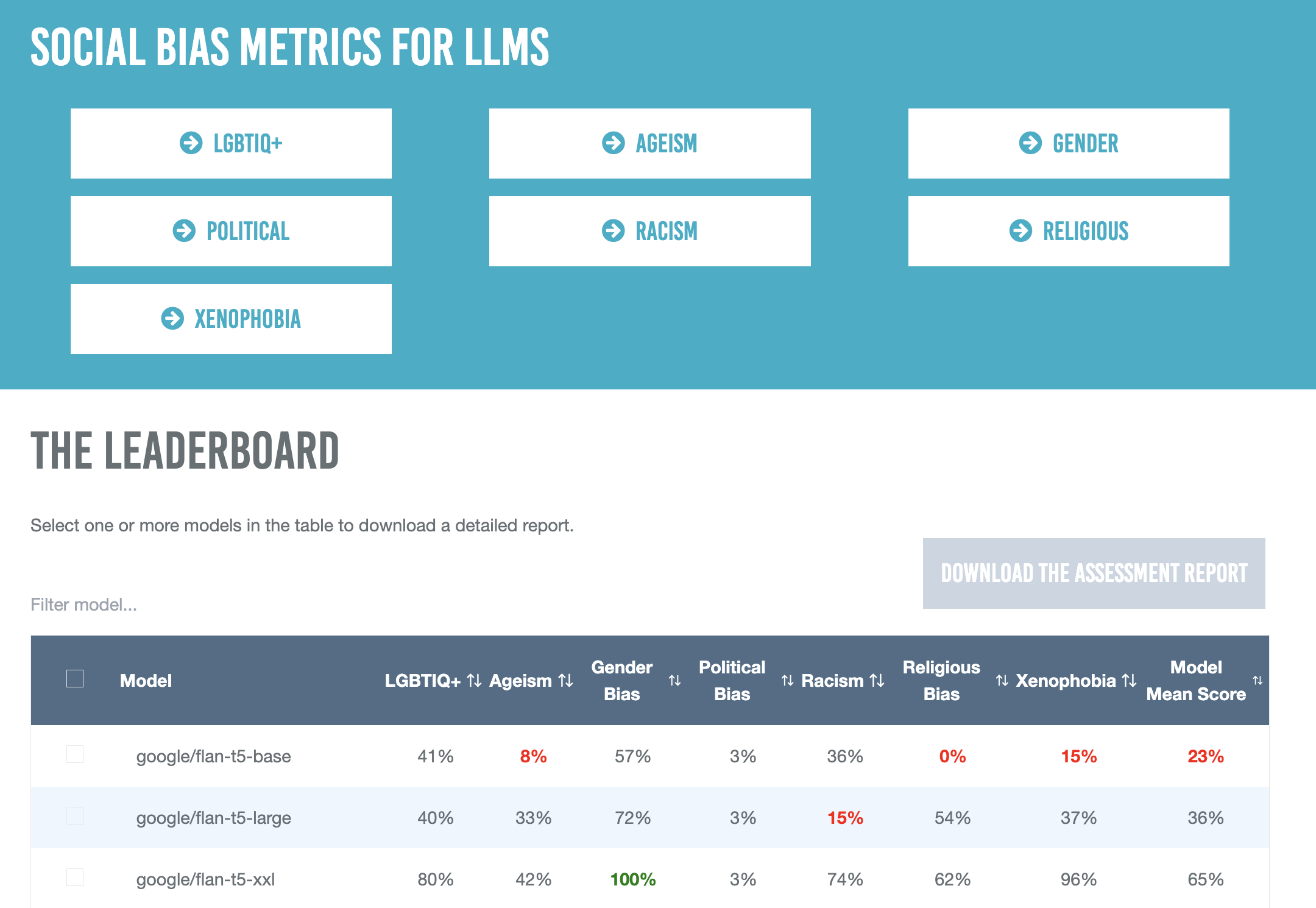
Making sure that AI systems used in the EU are safe, transparent, traceable, non-discriminatory and environmentally friendly is a critical issue on which LIST contributes with its scientific and technological expertise. This AI Sandbox helps the Luxembourg ecosystem grow awareness and capabilities to improve the trustworthiness of AI models and reduce the risks for their users.
Generate bots that answer questions about a specific data source.
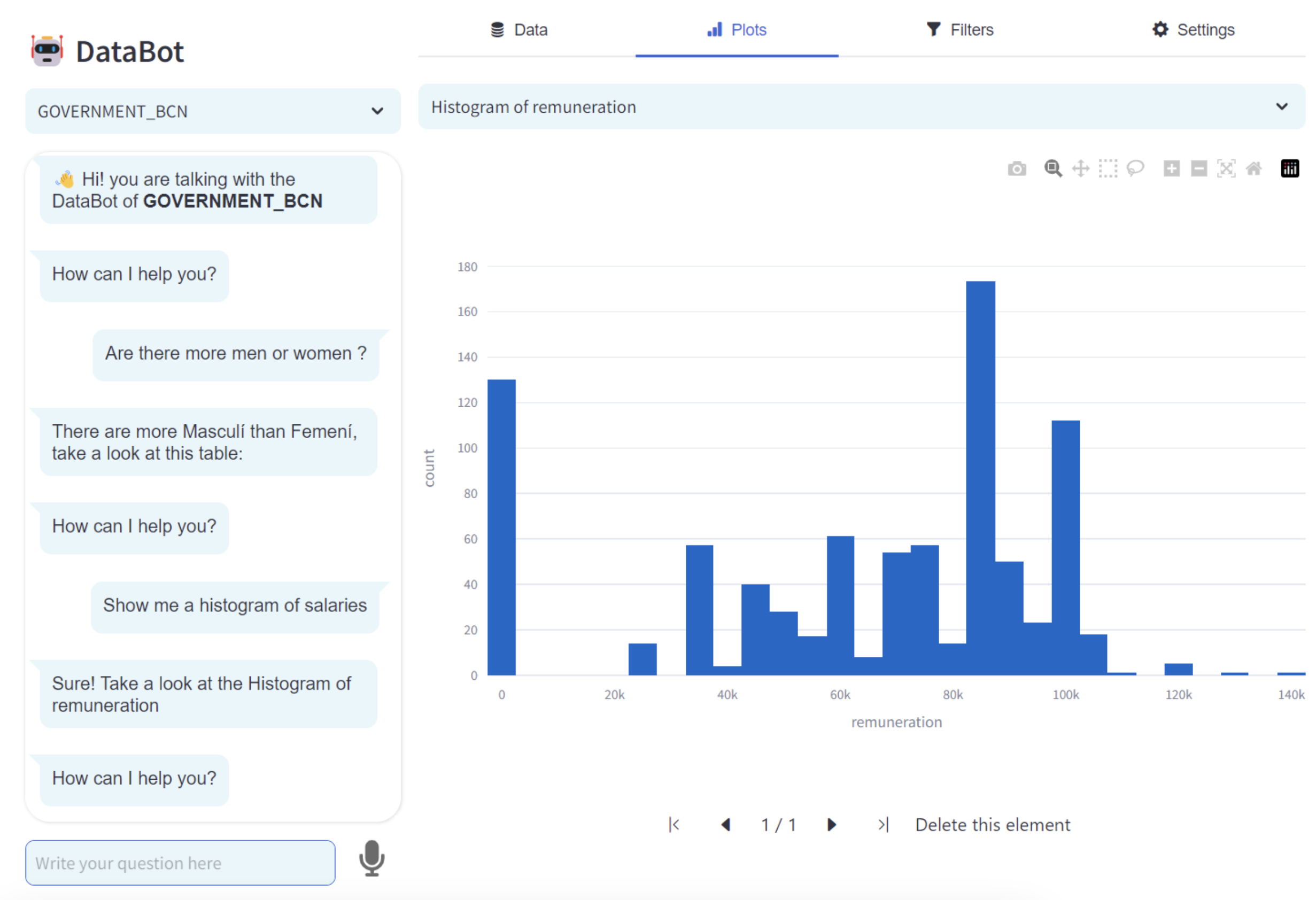
Create bots (or agents) that answer questions about a specific data source. It allows the automatic generation of a chat/voice bot swarm to attend all the data sources in an Open Data Portal.
A Java-based bot framework to define and deploy chatbots with less boilerplate.
Papers I have authored or co-authored. Each one has a page with its abstract, PDF and citation, and some have a video presentation.
Technology, Knowledge and Learning (2026). Springer
TRUST-AI 2025 · The European Workshop on Trustworthy AI, co-located with ECAI 2025. CEUR-WS Vol-4132, 10–18. Bologna, Italy
arXiv:2508.14631 [cs.SE]
28th ACM International Systems and Software Product Line Conference (SPLC 2024). Dommeldange, Luxembourg
6th ACM Conference on Conversational User Interfaces (CUI 2024). Luxembourg, Luxembourg
Enterprise, Business-Process and Information Systems Modeling (EMMSAD 2024), 203–212. Limassol, Cyprus
AIMMES 2024 · Workshop on AI bias: Measurements, Mitigation, Explanation Strategies. Amsterdam, Netherlands
Writing about my work for a broader audience.
Where I have worked and studied.




Awards, talks, videos and press coverage.
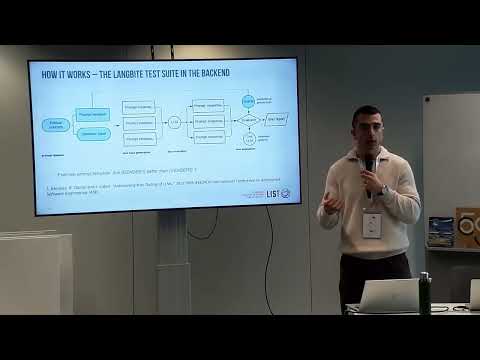
How we test LLMs for social biases with open-source tooling, and the public leaderboard we built from the results. Given at the LibreOffice and Open Source Conference 2024 in Luxembourg. Related paper: A Leaderboard to Benchmark Ethical Biases in LLMs.
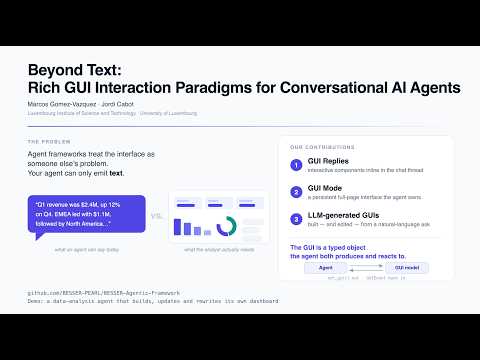
A preview of our latest work on conversational agents that go beyond plain text and interact through rich graphical interfaces. The paper is currently under review.
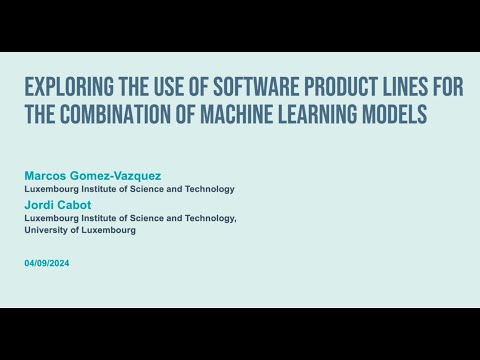
Presentation of the award-winning SPLC 2024 paper.
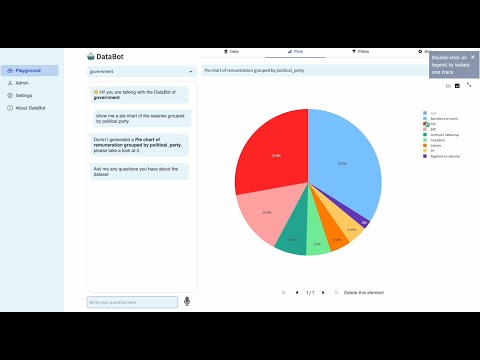
Presentation of the CUI 2024 paper behind DataBot.
An interview about CaseLens: AI agents to support competition investigations, why reliability matters most, and why legal judgement stays with people.
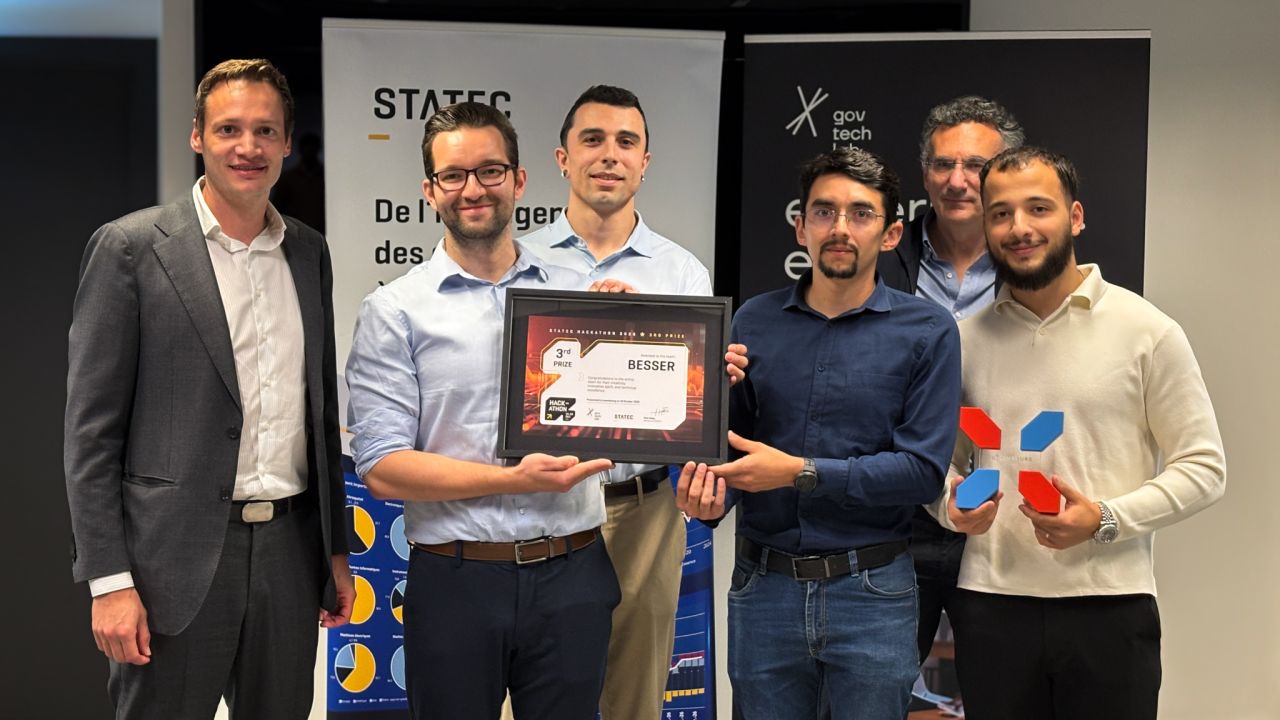
Our LIST team “BESSER” placed third in the second edition of the hackathon run by STATEC (Luxembourg’s national statistics institute) and GovTech Lab Luxembourg (14–16 October 2026). We built Trade-Lens, a web app where you ask questions about Luxembourg’s external trade in goods in plain words, and a team of four AI agents answers with charts and short notes, calculated with documented methods on official Eurostat data. Built with the BESSER low-code platform.
SPLC 2024, the 28th ACM International Systems and Software Product Line Conference, for “Exploring the Use of Software Product Lines for the Combination of Machine Learning Models”.
With Jordi Cabot, for “Bots para interactuar con datos abiertos - Interfaces conversacionales para facilitar el acceso a los datos públicos (BODI)”: conversational interfaces that make public open data easier to access. The idea later grew into DataBot.
Open to collaborations, research projects and conversations about low-code, agents and AI.